
Celestron
Celestron NexStar 4SE Maksutov Computerized Telescope
SKU: 11049
Yes, our inventory is accurate!
 Qualifies for Free Ground Economy Shipping (CONUS Only)
A grab-and-go computerized telescope with razor-sharp planetary views
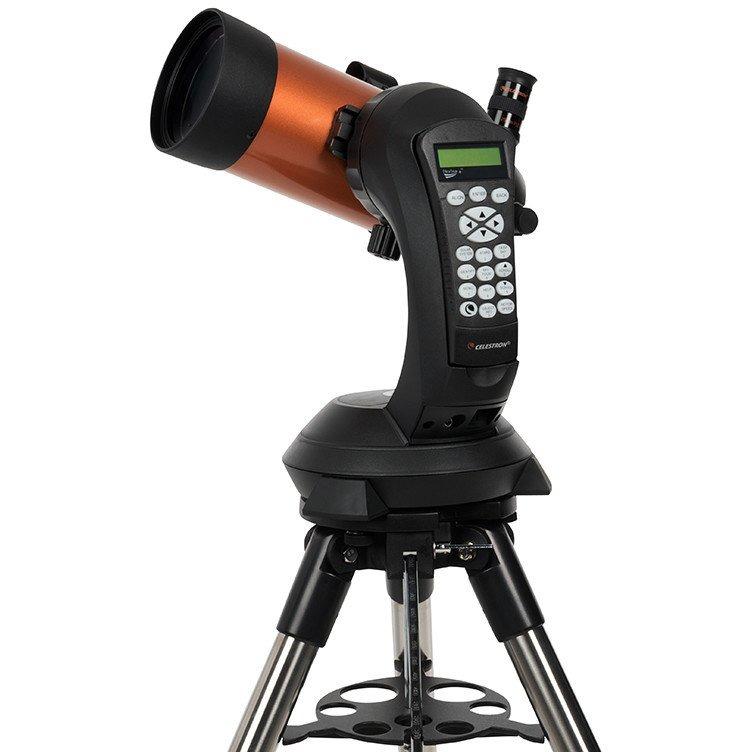
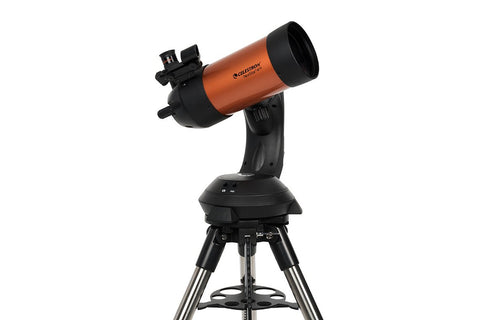
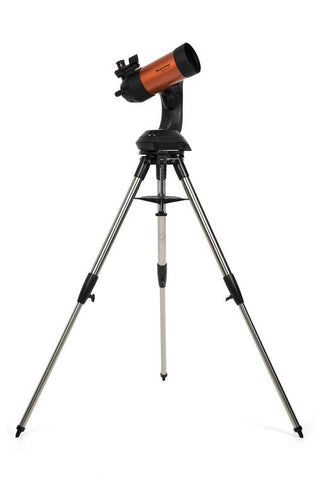
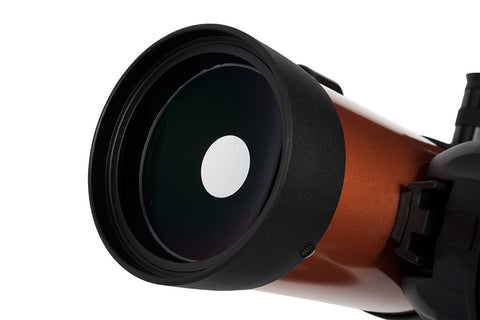
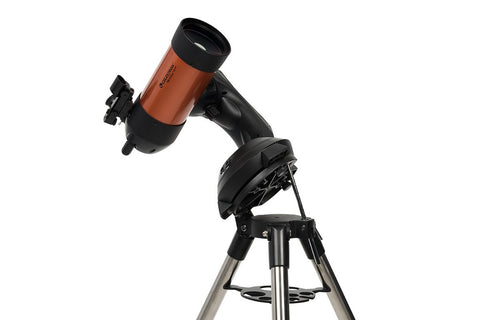
The Celestron NexStar 4SE puts a 4-inch (102mm) Maksutov-Cassegrain telescope on Celestron's computerized GoTo mount, which finds and tracks more than 40,000 objects for you. The long f/13 focal ratio gives crisp, high-contrast views of the Moon, planets and double stars, and the tube is only 13.5 inches long and weighs 6 lbs. It's one of the easiest ways to get a real computerized telescope into a small car, a closet or a dorm room.
What you'll see
- The Moon: craters, mountain ranges and valleys in sharp, contrasty detail.
- Planets: Saturn's rings, Jupiter's cloud belts and four largest moons, and the phases of Venus.
- Deep sky: bright targets like the Orion Nebula, the Pleiades, the Hercules Globular Cluster and colorful double stars such as Albireo.
Set up in minutes with SkyAlign
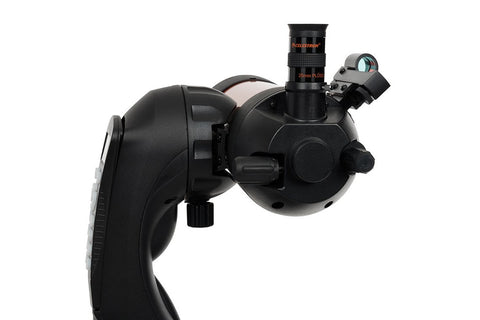
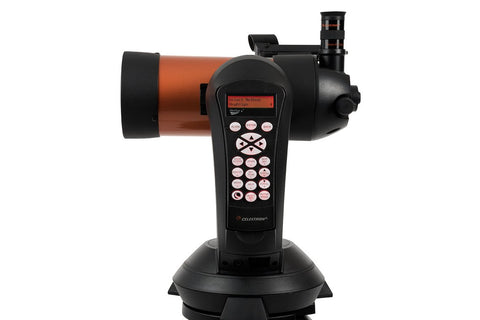
You don't need to know the night sky to get started. Point the telescope at any three bright stars or planets, press Align, and SkyAlign works out where it's pointing. From then on, choose an object on the NexStar+ hand control and the 4SE slews to it and keeps it centered. The single fork arm mount and steel tripod come apart into separate pieces for easy carrying. A built-in flip mirror lets you view straight through or at a comfortable 90° angle without a separate diagonal.
What to add for the best views
- Power (required): the 4SE runs on 8 AA batteries, which aren't included and run down quickly in cold weather. We recommend the rechargeable PowerTank Lithium LT for observing away from home, or the Celestron 2 amp AC adapter for the backyard. Our 4SE Lithium LT bundle and 4SE AC bundle include power and other essentials.
- A higher-power eyepiece: the included 25mm eyepiece gives 53x, which is great for finding and framing objects. Add a 9mm eyepiece for about 147x on the Moon, Saturn and Jupiter: the Celestron Omni 9mm is a great value, and the Celestron X-Cel LX 9mm adds a wider field and more comfortable eye relief.
- A Moon filter: a variable polarizing filter lets you dim the bright Moon to a comfortable level and brings out surface detail.
- A case: the Celestron Deluxe Case holds the 4SE's tube and fork arm together for storage and travel.
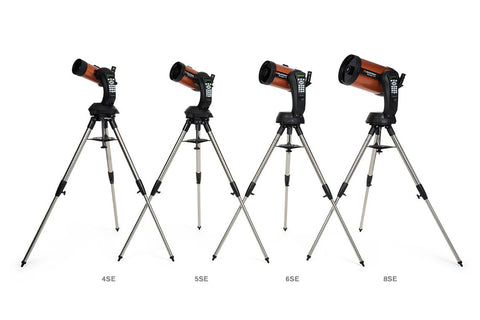
NexStar 4SE vs. 5SE and 6SE
| NexStar 4SE | NexStar 5SE | NexStar 6SE | |
|---|---|---|---|
| Optical design | Maksutov-Cassegrain | Schmidt-Cassegrain | Schmidt-Cassegrain |
| Aperture | 4" (102mm) | 5" (125mm) | 6" (150mm) |
| Focal length | 1325mm (f/13) | 1250mm (f/10) | 1500mm (f/10) |
| Magnification with included 25mm eyepiece | 53x | 50x | 60x |
| Highest useful magnification | 241x | 295x | 354x |
| Tripod | Steel, built-in wedge | Steel, built-in wedge | Steel |
| Best for | The smallest, lightest SE; Moon, planets and double stars | More light for deep-sky objects in a compact tube | The best balance of aperture, weight and price |
Looking at larger telescopes? Our Schmidt-Cassegrain telescope guide compares every size, from 5" to 11".
What's in the box
- 4" Maksutov-Cassegrain optical tube with StarBright XLT coatings and built-in flip mirror
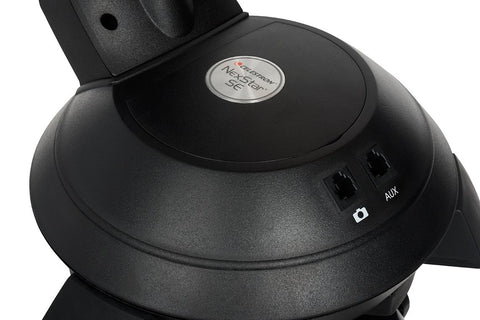
- Single fork arm computerized alt-azimuth mount with NexStar+ hand control
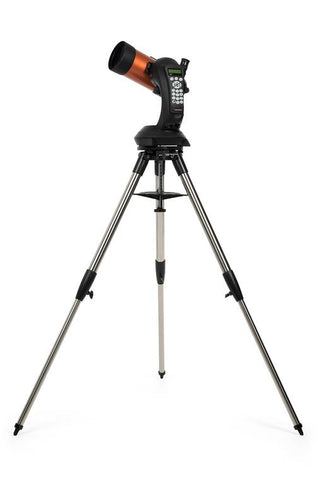
- Adjustable steel tripod with built-in wedge and accessory tray
- 25mm eyepiece (53x)
- StarPointer red-dot finderscope
- Starry Night Special Edition software and SkyPortal app
NexStar 4SE FAQ
Is the NexStar 4SE good for beginners?
Yes. SkyAlign gets you aligned without knowing the stars, the GoTo mount finds objects for you, and the small tube is easy to handle and needs almost no maintenance. Take a few minutes with the manual to learn the alignment steps before your first night out.
Can I see Saturn's rings and Jupiter's moons?
Yes. At 53x with the included eyepiece, Saturn's rings and Jupiter's four largest moons are easy to see. With a 9mm eyepiece (about 147x), Jupiter's cloud belts and Saturn's ring shadow show more detail.
Should I get the 4SE or the 5SE?
Both are compact and use the same mount. The 5SE gathers about 50% more light, which helps on galaxies and nebulae, and has a shorter f/10 focal ratio for slightly wider views. The 4SE's Maksutov design is simple and holds its alignment well, and it excels on the Moon, planets and double stars.
What accessories do you recommend for the 4SE?
These are the add-ons we suggest most often for new 4SE owners:
- A 9mm eyepiece for higher magnification on the Moon and planets. It gives about 147x on the 4SE, close to the most the 4-inch aperture supports on a typical night. The Celestron Omni 9mm is a great value, and the Celestron X-Cel LX 9mm adds a wider field and more comfortable eye relief.
- A variable polarizing filter to dim the bright Moon to a comfortable level and bring out surface detail.
- Power: the Celestron 2 amp AC adapter for the backyard, or the rechargeable PowerTank Lithium LT for observing anywhere.
- The Celestron Deluxe Case to protect the telescope in storage and on the road.
What power does it need?
Eight AA batteries (not included) or an external 12V source. Rechargeable options like the PowerTank Lithium LT or an AC adapter are far more practical, and batteries drain quickly in cold weather.
Can I do astrophotography with the 4SE?
Yes, for the Moon and planets: a planetary camera and short video captures produce excellent results. The long f/13 focal ratio and alt-azimuth tracking make long-exposure deep-sky imaging impractical. If deep-sky imaging is your main goal, a smart telescope is a better fit.
Specifications
| Optics | |
|---|---|
| Optical design | Maksutov-Cassegrain |
| Aperture | 102mm (4.02") |
| Focal length | 1325mm (52") |
| Focal ratio | f/13 |
| Optical coatings | StarBright XLT |
| Secondary mirror obstruction | 35mm (1.38"), 12% by area |
| Highest useful magnification | 241x |
| Lowest useful magnification | 15x |
| Limiting stellar magnitude | 12.5 |
| Resolution (Dawes / Rayleigh) | 1.14 / 1.37 arcseconds |
| Light-gathering power | 212x the unaided eye |
| Diagonal | Internal flip mirror (straight-through or 90°) |
| Front lens outer diameter (for solar filter sizing) | 124mm |
| Mount and electronics | |
| Mount | Single fork arm computerized alt-azimuth |
| Hand control | NexStar+, 40,000+ object database |
| Alignment | SkyAlign, Auto 2-Star, 2-Star, 1-Star, Solar System Align |
| Tracking modes | Alt-Az, EQ North and EQ South (using the built-in wedge) |
| Tracking rates | Sidereal, solar and lunar |
| Slew speeds | 9 |
| Power | 8 AA batteries (not included) or external 12V |
| Physical | |
| Optical tube length | 13.5" (343mm) |
| Optical tube weight | 6 lbs (2.7 kg) |
| Total kit weight | 23 lbs (10.4 kg) |
| Tripod | Adjustable steel with built-in wedge, 10 lbs (4.5 kg) |
| Warranty | 2 years |
| Celestron model | 11049 |